

Combo Games - Play with strengths - for young and old alike
In this combo find our emblematic trio of games on strengths.
Ranging from games for the youngest to those for adults, each targets different actions and therefore complements each other perfectly as accompaniment.
Game descriptions
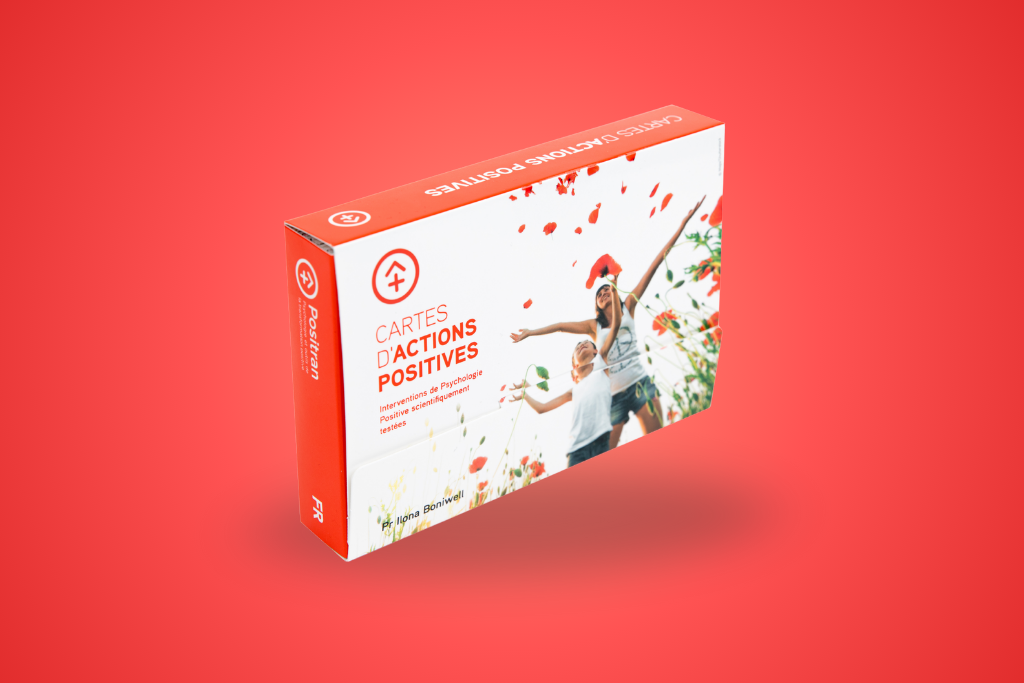
Strengths Maps
If I asked you to name your strengths, what would your answer be? The majority of people are reluctant to talk about their strengths and many don't even know what they are. According to Professor Alex Linley, “a strength is a pre-existing capacity for a particular way of behaving, thinking or feeling, which is authentic and energizing to the user, and which enables optimum functioning, development and performance”. In fact, the concept of strengths is so central to positive psychology today that knowing and using strengths is considered one of the most direct paths to personal and professional growth.
Research indicates that high achievers are aware of their abilities and set goals that are slightly above their current performance level, while low achievers are unaware of their abilities and often set unrealistic goals. Essentially, high achievers build their personal lives and careers on their talents and strengths. They learn to recognize their talents and develop them further. They find the roles that suit them best and they invent ways to apply their talents and strengths in their lives. When it comes to weaknesses, they manage them rather than develop them.
Research shows that simply identifying your strengths leads to increased well-being. Using your strengths at work – for increased engagement and performance.
The 50 strengths pack is a synthesis of all existing approaches to strengths classification and covers the full extent of our current scientific knowledge of strengths. (As our strengths cards are available in several languages, please carefully check the quantity and language chosen when ordering).
To go further
Our training on the theme of strengths around 4 global issues:
Strengths as a lever for commitment
Activate your strengths in the face of stress
Leading through strengths
Group diagnosis of strengths
Discover the strengths:
- In our blog: How are your strengths your assets for tomorrow?
- In the blog of our Belgian partner, Evoluo
- In this blog by Camille Lamouille, Positrainer
- In this blog by docendi
Powers Cards fantastic
Play with the fantastic powers cards to find yours, have more energy and self-confidence in your life.
Discover the 6 fantastic worlds and the Super Powers of their heroes.
Positran's ambition is to transform the conclusions of psychological research into tools aimed at promoting the development and well-being of everyone. But above all, children’s ambition is to have fun. This is why we designed this tool in the most engaging and fun form of a game possible, in order to awaken children's energy and self-confidence.
The 24 character strengths, taken from the work of Seligman and Peterson, are the optimal parts of our personality which characterize who we are. The hallmark of psychological strength is that it makes us feel competent, authentic and energized. Scientific research on these forces guided the development of this game. They are represented here by 24 characters (brilliantly illustrated by Charlie Bourdaud) each with a unique power.
These forces are in fact the variation of 6 fundamental values which are represented by the 6 worlds of the game:
• Wisdom and Knowledge (world of water)
• Courage (desert world)
• Humanity and Relationships (forest world)
• Moderation and Balance (miniature world)
• Justice (bird world)
• Transcendence, Intuition and Inspiration (world of plants)
Meeting these characters, their world and their power therefore promotes the identification and development of the child's own strengths, also allowing him to better recognize them in others.
Packs of 24 playing cards + 1 presentation card and 3 “Games” cards
Play of forces
Positive traits are at the heart of positive psychology, as is the recognition and development of strengths of character. Positive psychology is “the study of the conditions and processes that contribute to the flourishing or optimal functioning of people, groups and institutions” (Gable & Haidt, 2005).
Knowing your strengths strengthens self-confidence because it helps develop a positive self-image. It also allows one to understand others better and see others through the lens of their strengths.
Strengths can be defined as characteristics that allow a person to be as successful and happy as they can be (Wood et al., 2011). They can be both nurtured and practiced. Strengths are our natural way of functioning. When we use our strengths, we are authentic (that's the real me), full of energy and successful.
This pack of 24 cards is based on the work of Seligman and Peterson, published in 2004, who developed a ranking of 24 universal strengths recognized and valued “across history and cultures”. They are grouped into 6 categories of forces which have consistent underlying values, which is why these cards are divided into 6 families.
Who is it aimed at?
Simply anyone!
Managers, project managers, trainers, psychologists, therapists, youth workers, teachers, human resources specialists and anyone curious.
Their uses
Strengths Maps
So how can you use these maps to identify, develop and utilize strengths to the fullest? Discover examples of activities that can be carried out in individual conversations and sessions, within a family circle, with friends and, of course, in many training and team building situations. These activities are written with the end user in mind, so if you are a coach, trainer, or therapist, please note that by “you” we might also mean “your client.”
Strengths Gym
In groups of 5-8, with the cards in front of you, choose three cards that you consider to be your greatest strengths. Take a look at the description and highlights questions on the back. Introduce yourself to the group by giving concrete examples of using these strengths (not just “I think I’m a creative person”). Each member of the group takes turns doing the same.
Then, name one or more other strengths for the other members of the group, giving concrete examples of when you have seen them use that strength. This exercise is contagious; you'll see the whole group naming each other's strengths in just a few minutes. It can also be very emotional.
Using Strengths in Recruiting
Give the strengths cards to the candidate or spread them out on the table. Ask the candidate to choose between 3 and 5 cards that seem most authentic to them and to give some examples of using these strengths in their previous professional or volunteer activities.
Using strengths in a professional exam
Explain the approach to the employee. Give the strength cards to the candidate or spread them out on a table. Ask the employee to pick up between 3 and 5 cards that represent their main strengths. Discuss the deployment of your strengths in your current position and/or your professional progression. Discuss ways to move forward (another meeting, testing strengths, creating a job). Example questions to use:
– Imagine an ideal work day/week. How would your strengths be expressed?
– In what tasks do you use your strengths the most? How can you make them more meaningful?
– How do your strengths match the needs of your team, your department, your company?
– How can your professional progression allow you to use more of what you know how to do?
Click here to discover how to use the Strengths Cards in video
Powers Cards fantastic
There are 24 different cards that feature 24 heroes each with a power.
Each power symbolizes a universal character strength that has been identified by positive psychology researchers. We know from science that the more we know and use our powers, the more we are ourselves, the more successful we are and the more energetic we feel!
THE GOAL OF THE GAME?
Stock up with energy points to win!
You will be able to play 3 different games, designed with the help of psychologists Justine Chabanne and Raphaël Rebai, which can be played separately or in one large giant game by chaining them together.
- 1st game: will you be able to find the power of each character? You too are the hero of your life, find your powers and complete challenges to activate them.
- 2nd game: you will become a detective to discover the powers of the people around you.
- 3rd game: go and explore the worlds of these heroes. Here, you will have to demonstrate precision, inventiveness but also become a storyteller in order to master the powers. The powers are yours! Fill up on energy!
Play of forces
“Each of us has many more things hidden within us than we have had the opportunity to explore.” (Muhammad Yunus)
Examples of activities using the Game of Strengths:
• Finding my own strengths?
• Giving strength to someone else (a friend, parent, sister, brother, etc.)
To identify and/or give strength to someone else, we must be able to explain our choice. For example: “I give you the power of creativity because you make beautiful things with your hands!”
• Highlights of the day
What makes you feel like you really are? What are you most proud of? If you had to choose a force of the day, what would it be? Why this strength and why today?
• Strengths of the superhero
Alone or with parents/supporters, identify your favorite superhero. For you, what are its strengths? Which ones do you prefer? Identify a difficult situation for you. What would your superhero do in this situation? How can you learn from him?
Find twenty ways to play with the Game of Forces here.
Strengths Maps
If I asked you to name your strengths, what would your answer be? The majority of people are reluctant to talk about their strengths and many don't even know what they are. According to Professor Alex Linley, “a strength is a pre-existing capacity for a particular way of behaving, thinking or feeling, which is authentic and energizing to the user, and which enables optimum functioning, development and performance”. In fact, the concept of strengths is so central to positive psychology today that knowing and using strengths is considered one of the most direct paths to personal and professional growth.
Research indicates that high achievers are aware of their abilities and set goals that are slightly above their current performance level, while low achievers are unaware of their abilities and often set unrealistic goals. Essentially, high achievers build their personal lives and careers on their talents and strengths. They learn to recognize their talents and develop them further. They find the roles that suit them best and they invent ways to apply their talents and strengths in their lives. When it comes to weaknesses, they manage them rather than develop them.
Research shows that simply identifying your strengths leads to increased well-being. Using your strengths at work – for increased engagement and performance.
The 50 strengths pack is a synthesis of all existing approaches to strengths classification and covers the full extent of our current scientific knowledge of strengths. (As our strengths cards are available in several languages, please carefully check the quantity and language chosen when ordering).
To go further
Our training on the theme of strengths around 4 global issues:
Strengths as a lever for commitment
Activate your strengths in the face of stress
Leading through strengths
Group diagnosis of strengths
Discover the strengths:
- In our blog: How are your strengths your assets for tomorrow?
- In the blog of our Belgian partner, Evoluo
- In this blog by Camille Lamouille, Positrainer
- In this blog by docendi
Powers Cards fantastic
Play with the fantastic powers cards to find yours, have more energy and self-confidence in your life.
Discover the 6 fantastic worlds and the Super Powers of their heroes.
Positran's ambition is to transform the conclusions of psychological research into tools aimed at promoting the development and well-being of everyone. But above all, children’s ambition is to have fun. This is why we designed this tool in the most engaging and fun form of a game possible, in order to awaken children's energy and self-confidence.
The 24 character strengths, taken from the work of Seligman and Peterson, are the optimal parts of our personality which characterize who we are. The hallmark of psychological strength is that it makes us feel competent, authentic and energized. Scientific research on these forces guided the development of this game. They are represented here by 24 characters (brilliantly illustrated by Charlie Bourdaud) each with a unique power.
These forces are in fact the variation of 6 fundamental values which are represented by the 6 worlds of the game:
• Wisdom and Knowledge (world of water)
• Courage (desert world)
• Humanity and Relationships (forest world)
• Moderation and Balance (miniature world)
• Justice (bird world)
• Transcendence, Intuition and Inspiration (world of plants)
Meeting these characters, their world and their power therefore promotes the identification and development of the child's own strengths, also allowing him to better recognize them in others.
Packs of 24 playing cards + 1 presentation card and 3 “Games” cards
Play of forces
Positive traits are at the heart of positive psychology, as is the recognition and development of strengths of character. Positive psychology is “the study of the conditions and processes that contribute to the flourishing or optimal functioning of people, groups and institutions” (Gable & Haidt, 2005).
Knowing your strengths strengthens self-confidence because it helps develop a positive self-image. It also allows one to understand others better and see others through the lens of their strengths.
Strengths can be defined as characteristics that allow a person to be as successful and happy as they can be (Wood et al., 2011). They can be both nurtured and practiced. Strengths are our natural way of functioning. When we use our strengths, we are authentic (that's the real me), full of energy and successful.
This pack of 24 cards is based on the work of Seligman and Peterson, published in 2004, who developed a ranking of 24 universal strengths recognized and valued “across history and cultures”. They are grouped into 6 categories of forces which have consistent underlying values, which is why these cards are divided into 6 families.
Simply anyone!
Managers, project managers, trainers, psychologists, therapists, youth workers, teachers, human resources specialists and anyone curious.
Strengths Maps
So how can you use these maps to identify, develop and utilize strengths to the fullest? Discover examples of activities that can be carried out in individual conversations and sessions, within a family circle, with friends and, of course, in many training and team building situations. These activities are written with the end user in mind, so if you are a coach, trainer, or therapist, please note that by “you” we might also mean “your client.”
Strengths Gym
In groups of 5-8, with the cards in front of you, choose three cards that you consider to be your greatest strengths. Take a look at the description and highlights questions on the back. Introduce yourself to the group by giving concrete examples of using these strengths (not just “I think I’m a creative person”). Each member of the group takes turns doing the same.
Then, name one or more other strengths for the other members of the group, giving concrete examples of when you have seen them use that strength. This exercise is contagious; you'll see the whole group naming each other's strengths in just a few minutes. It can also be very emotional.
Using Strengths in Recruiting
Give the strengths cards to the candidate or spread them out on the table. Ask the candidate to choose between 3 and 5 cards that seem most authentic to them and to give some examples of using these strengths in their previous professional or volunteer activities.
Using strengths in a professional exam
Explain the approach to the employee. Give the strength cards to the candidate or spread them out on a table. Ask the employee to pick up between 3 and 5 cards that represent their main strengths. Discuss the deployment of your strengths in your current position and/or your professional progression. Discuss ways to move forward (another meeting, testing strengths, creating a job). Example questions to use:
– Imagine an ideal work day/week. How would your strengths be expressed?
– In what tasks do you use your strengths the most? How can you make them more meaningful?
– How do your strengths match the needs of your team, your department, your company?
– How can your professional progression allow you to use more of what you know how to do?
Click here to discover how to use the Strengths Cards in video
Powers Cards fantastic
There are 24 different cards that feature 24 heroes each with a power.
Each power symbolizes a universal character strength that has been identified by positive psychology researchers. We know from science that the more we know and use our powers, the more we are ourselves, the more successful we are and the more energetic we feel!
THE GOAL OF THE GAME?
Stock up with energy points to win!
You will be able to play 3 different games, designed with the help of psychologists Justine Chabanne and Raphaël Rebai, which can be played separately or in one large giant game by chaining them together.
- 1st game: will you be able to find the power of each character? You too are the hero of your life, find your powers and complete challenges to activate them.
- 2nd game: you will become a detective to discover the powers of the people around you.
- 3rd game: go and explore the worlds of these heroes. Here, you will have to demonstrate precision, inventiveness but also become a storyteller in order to master the powers. The powers are yours! Fill up on energy!
Play of forces
“Each of us has many more things hidden within us than we have had the opportunity to explore.” (Muhammad Yunus)
Examples of activities using the Game of Strengths:
• Finding my own strengths?
• Giving strength to someone else (a friend, parent, sister, brother, etc.)
To identify and/or give strength to someone else, we must be able to explain our choice. For example: “I give you the power of creativity because you make beautiful things with your hands!”
• Highlights of the day
What makes you feel like you really are? What are you most proud of? If you had to choose a force of the day, what would it be? Why this strength and why today?
• Strengths of the superhero
Alone or with parents/supporters, identify your favorite superhero. For you, what are its strengths? Which ones do you prefer? Identify a difficult situation for you. What would your superhero do in this situation? How can you learn from him?
Find twenty ways to play with the Game of Forces here.
You may also like